
If a new belly ring has ever left your skin red, itchy, or irritated around the piercing, the jewelry itself is usually the culprit — not your skin, and not something you did wrong with aftercare. Nickel is by far the most common cause, and it hides in more body jewelry than you’d expect, even in pieces marketed as “stainless.”
Here’s what actually matters when you’re shopping with sensitive skin in mind, and how to tell a genuinely hypoallergenic piece from one that just says it is.
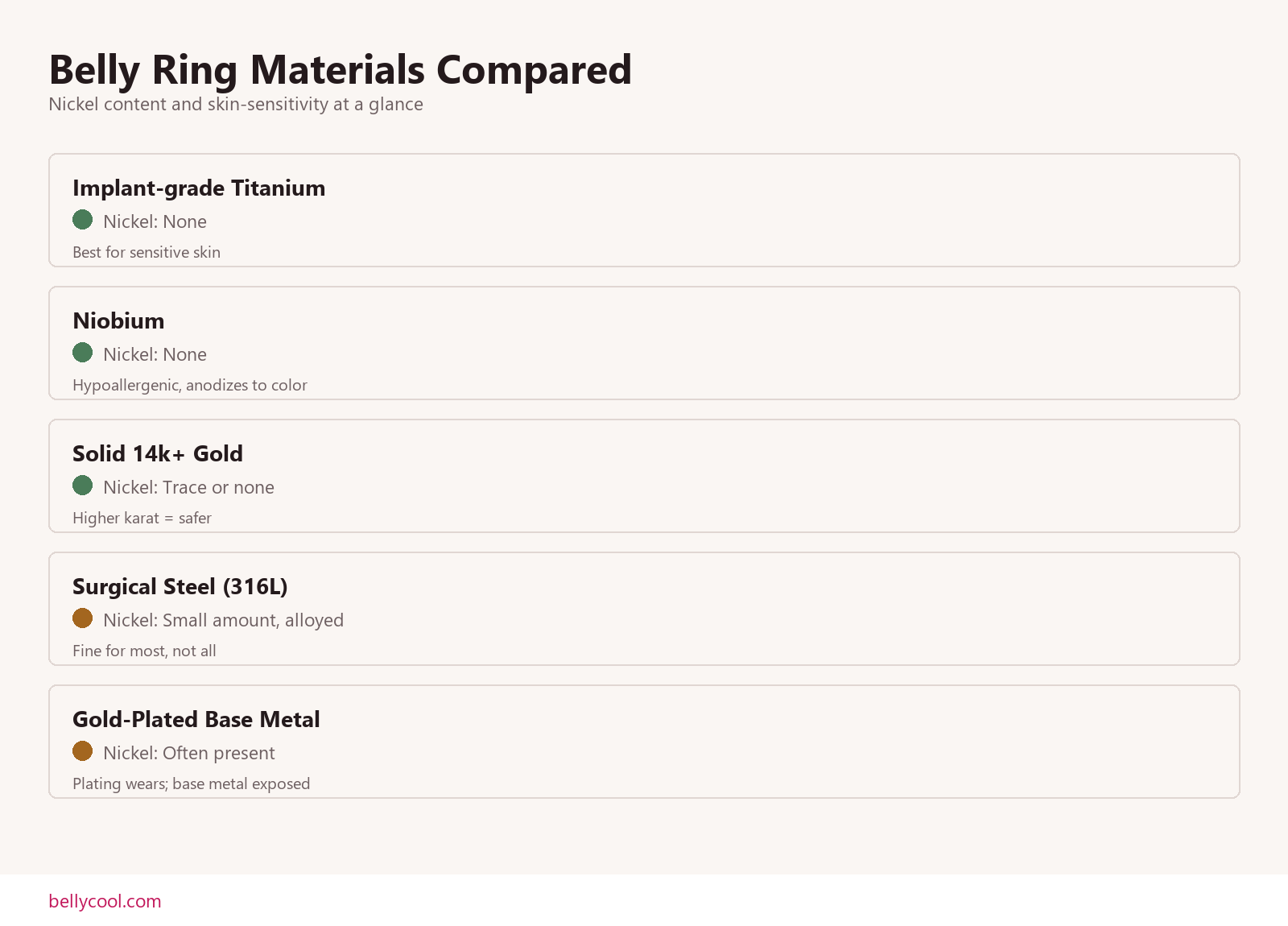
Why Nickel Is the Real Problem
Nickel allergy is one of the most common causes of contact dermatitis, and according to Mayo Clinic’s overview of nickel allergy, it can develop at any point in life, even in people who’ve worn nickel-containing jewelry for years without issue before. Sensitivity tends to build up with repeated exposure rather than showing up immediately, which is why a piece that was fine last year can suddenly cause a reaction now.
The reaction itself is usually localized redness, itching, or small bumps right around the piercing — not a full-body response, but persistent and unpleasant enough that it’s worth solving at the source instead of just switching aftercare products.
What makes nickel especially tricky is how common it is in everyday metal alloys. It’s cheap, durable, and easy to work with, so manufacturers use it in everything from inexpensive fashion jewelry to some grades of stainless steel. That means two rings that look and feel identical on a shelf can have completely different effects on your skin, depending entirely on what’s actually in the alloy rather than anything visible to the eye.
The Best Materials for Sensitive Skin
Implant-Grade Titanium
Titanium is a single element, not an alloy, which means there’s no nickel hiding inside it the way there can be with steel. It’s also lightweight and extremely biocompatible, which is part of why it’s used in actual surgical implants, not just jewelry.
Niobium
Niobium shares titanium’s advantage of being a pure element with zero nickel content, and it has one extra trick: it can be anodized into different colors without any dye or coating that could wear off or flake.
Solid Gold (14k and Up)
Higher-karat solid gold contains little to no nickel, though it’s worth confirming with the seller, since lower-karat gold alloys sometimes include it. This is also where our gold vs. silver belly ring comparison is useful, since it goes deeper into how different karats and finishes behave over time.
Medical-Grade Plastic (PTFE or Bioplast)
Flexible plastic barbells aren’t the most common choice for everyday wear, but they’re worth knowing about. Because they contain no metal at all, they’re sometimes recommended by piercers specifically for people with severe, confirmed metal allergies, or for wear during activities like swimming or contact sports where a metal bar isn’t ideal.
Materials That Cause Problems

Surgical Steel (With a Catch)
Most surgical steel is fine for the average person, but it’s technically an alloy that contains a small, tightly bound amount of nickel. For most wearers that nickel never becomes a problem, but if you’re highly sensitive, even that small amount can be enough to trigger a reaction over time.
Gold-Plated or Base-Metal Jewelry
This is the one to watch most closely. A thin gold or silver plating can look and feel identical to solid metal at first, but plating wears down with normal contact, sweat, and cleaning. Once it does, whatever base metal is underneath — frequently nickel-containing — is now touching your skin directly.
How to Tell If Jewelry Is Actually Hypoallergenic
“Hypoallergenic” isn’t a regulated term, so it can appear on packaging without meaning much. Look instead for a specific material claim: implant-grade titanium (often labeled ASTM F136 or similar), niobium, or a stated gold karat. If a listing only says “hypoallergenic” or “nickel-free” with no material specified, treat that as a yellow flag rather than a guarantee.
Common Mistakes to Avoid
- Assuming “stainless steel” means nickel-free. It doesn’t — stainless and surgical steel both typically contain some nickel.
- Ignoring early symptoms. Mild itching that gets brushed off often becomes a bigger reaction with continued exposure.
- Buying plated jewelry for long-term wear. Plating is fine for occasional pieces, but it’s a poor choice for anything worn daily against a healing or sensitive piercing.
- Switching aftercare products instead of switching materials. If irritation is material-related, no amount of extra cleaning will fix it.
Shopping Considerations
Once you’ve settled on a safe material, the usual sizing rules still apply on top of it. If you haven’t confirmed your gauge and length recently, it’s worth checking our belly ring size guide before ordering, since a poor fit can cause its own irritation that’s easy to mistake for a material reaction. Browsing a full belly button ring collection with materials listed per item makes it much easier to filter for exactly what your skin needs.
Material comes first, but it’s worth knowing that the safest options aren’t limited to plain, basic designs anymore — our 2026 belly ring trends roundup covers several current styles, including bioflex pieces, that work well for sensitive skin without sacrificing style.
If You’re Already Reacting to Current Jewelry
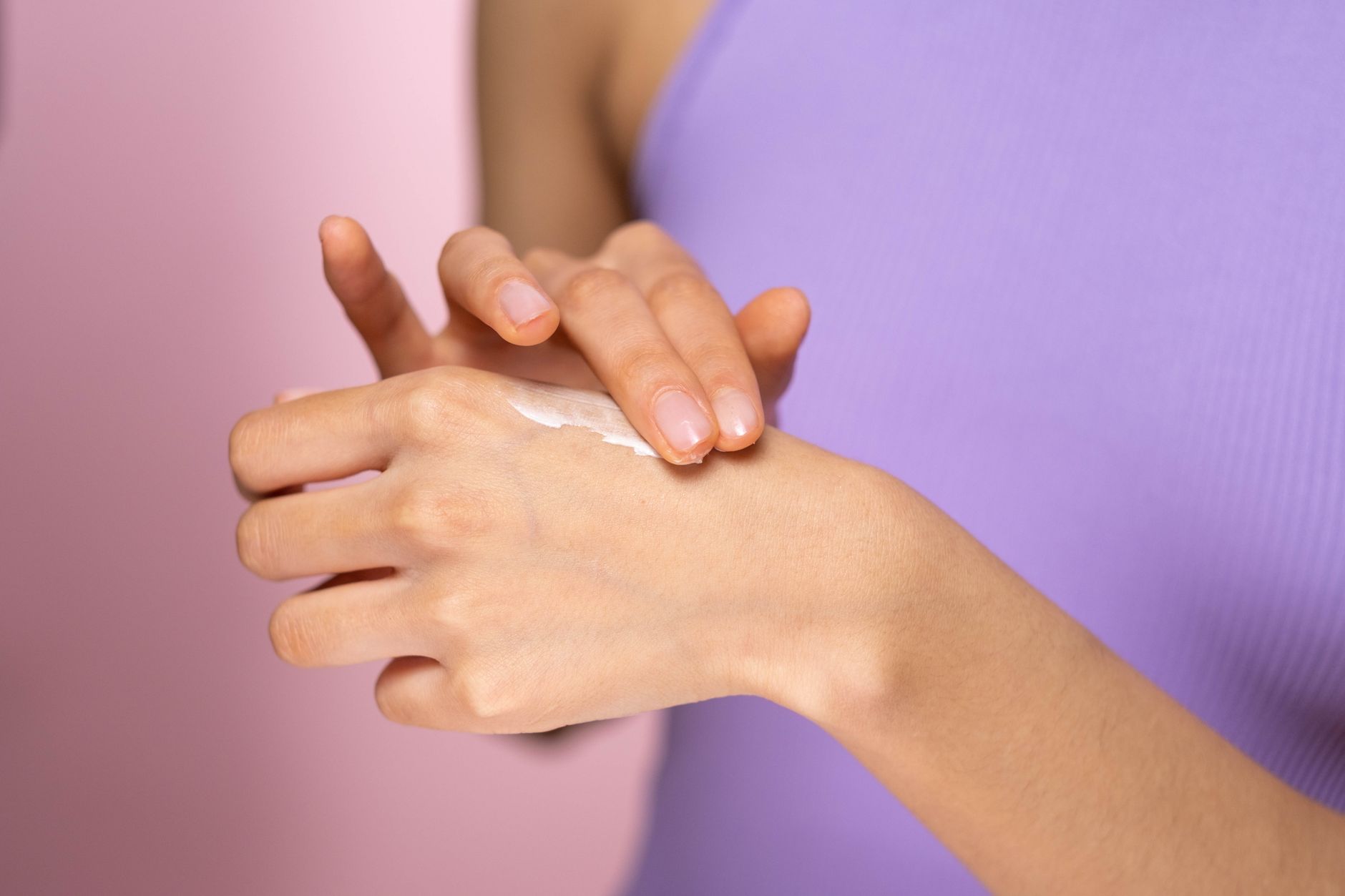
Swap to titanium or niobium as soon as you reasonably can, and in the meantime keep the area clean and avoid scented lotions or products directly on the piercing. If redness, swelling, or discharge doesn’t start improving within a few days of switching materials, that’s worth a conversation with a piercer or dermatologist rather than something to keep managing on your own.
It’s worth noting that removing jewelry entirely isn’t always the safest first move, especially on a piercing that hasn’t fully healed yet, since the opening can start to shrink surprisingly quickly. Swapping directly to a known-safe material is usually a better plan than leaving the piercing empty while you figure things out.
When a Patch Test Is Worth Doing
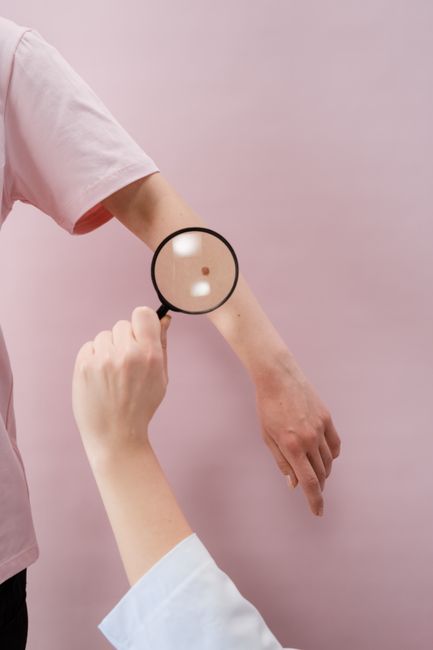
If you’ve reacted to jewelry before and want to confirm nickel is actually the cause rather than guessing, a dermatologist can run a simple nickel patch test. A small adhesive patch containing a diluted nickel solution is applied to your skin, usually on the back or upper arm, and left in place for about 48 hours before being checked for a reaction.
It’s a quick, low-cost way to get a definitive answer instead of cycling through materials by trial and error, and it’s particularly worth doing if you’ve reacted to jewelry that was labeled hypoallergenic or nickel-free, since that suggests something less common than a typical nickel sensitivity might be involved.
Frequently Asked Questions
Can I develop a nickel allergy even if I’ve never had one before?
Yes. Sensitivity often builds gradually with repeated exposure, so a metal that never bothered you before can start causing reactions later.
Is surgical steel safe for a new piercing?
It’s a standard, widely used option, but titanium or niobium are generally considered safer starting points if you already know you have sensitive skin.
Does gold-plated jewelry ever work for sensitive skin?
It can for very short-term or occasional wear, but it’s not a reliable choice for anything worn daily, since the plating wears through with normal use.
Are more expensive belly rings automatically safer for sensitive skin?
Not automatically — price reflects a lot of things besides material safety, including design complexity and brand. The material specification is what actually matters, so it’s worth checking that directly rather than assuming a higher price tag guarantees a hypoallergenic result.
How do I know if my reaction is to the metal versus the piercing healing normally?
Normal healing involves mild redness early on that steadily improves. A material reaction tends to appear or worsen after jewelry has already looked fine for a while, and it typically doesn’t improve with standard aftercare alone.
Final Thoughts
Sensitive skin doesn’t have to mean fewer options — it just means being specific about materials instead of trusting vague labels. Implant-grade titanium and niobium are the safest defaults, solid gold is a strong choice at higher karats, and steel and plated pieces are the two categories worth watching most carefully before you buy.
If you’re picking out a piece for someone with sensitive skin rather than for yourself, our belly ring gift guide covers how to shop safely as a gift-giver without needing to become a materials expert first.
And whichever material you land on, it’s available in more than one jewelry mechanism — our curved barbell vs. captive bead ring comparison covers how the two main styles hold up differently over time, material considerations included.
Leave a Reply