
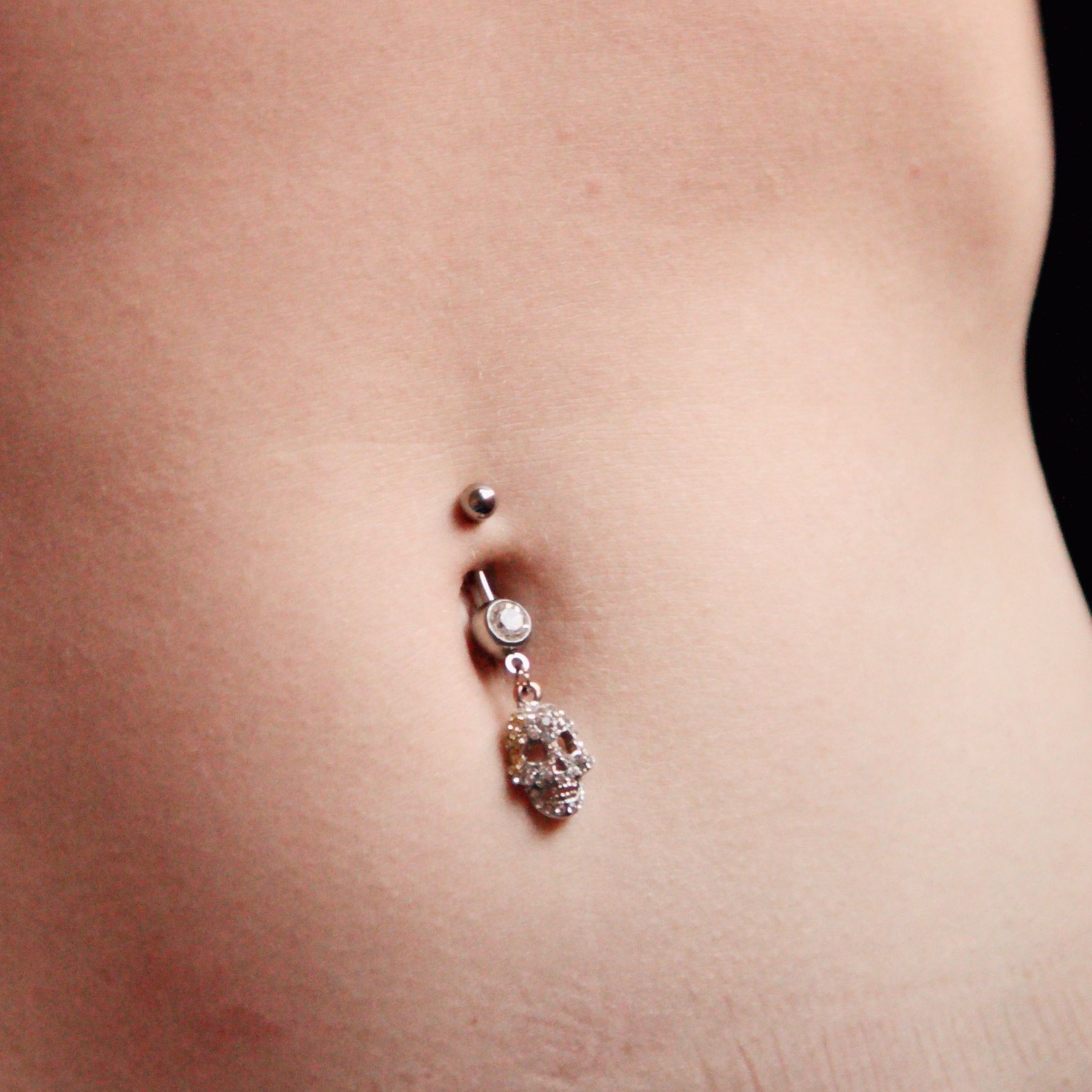
A belly ring is one of the easiest ways to add a bit of personality to your everyday look, but with so many bar lengths, closures, and charm styles out there, picking the right one can feel overwhelming. Here’s what actually matters when you’re choosing one.
Get the Size Right First
Fit matters more than style. A bar that’s too short can put pressure on healing or sensitive tissue, and one that’s too long can snag on clothing. Standard navel bars usually run between 3/8″ and 1/2″ (10mm–12mm), but the right length depends on your own anatomy and swelling level if the piercing is newer. If you’re not sure what you’re currently wearing, a piercer can measure it in a couple of minutes, or our belly ring size guide walks through how to measure it yourself with a caliper.
Think About Closure Type
Curved barbells (the classic banana-shaped bar with a ball on top and a dangle on the bottom) are the most common style and the easiest to put in and take out yourself. Clicker-style rings and captive bead rings are also popular but usually require a bit more care — or a piercer’s help — to open and close securely. If you’re deciding between a bar and a ring style, our curved barbell vs. captive bead ring comparison breaks down the tradeoffs in more depth.
Match the Charm to the Occasion
Small fixed balls or gems read as understated and work well for everyday wear or under fitted clothing, and they stay put during activity since there’s nothing hanging to catch or tug. Longer dangles with charms — hearts, stars, florals — show more when you’re in cropped styles and tend to catch more light and movement, which is great for going out but something to keep in mind if you’re active or wear more fitted tops day to day. A dangle can also tug on a piercing that isn’t fully healed, so most piercers recommend saving longer dangles for once you’re past the healing stage.
Matching Style to How You Actually Dress
Where you wear your jewelry most often is a genuinely useful filter for narrowing down style. If low-rise jeans and crop tops are already your everyday look, a dangle has room to actually show and catch light. If you mostly wear higher-waisted bottoms or fitted tops that sit over the navel, a fixed charm or a floating style sits flatter and won’t fight against fabric all day.
Reverse-style belly rings, where the decorative piece sits on the top ball instead of hanging below, are worth knowing about too — they stay visible even under higher-waisted clothing since the design sits higher on the piercing. If you’re planning around swimwear specifically, our guide to belly rings for summer covers which styles hold up best to pool and beach wear.
Metal Tone: Matching What You Already Own
If you already wear a lot of gold or silver jewelry elsewhere, matching your belly ring to that tone creates a more put-together look without any extra effort. That said, deliberately mixing gold and silver has become one of the more popular approaches this year rather than something to avoid — our 2026 belly ring trends roundup covers how that trend actually works in practice if you’d rather not choose just one metal.
Following Trends Without Overspending
It’s tempting to chase every new style at once, but a smarter approach is picking one or two current pieces to add to jewelry you already own rather than replacing your whole collection. A single opal or gemstone charm, for instance, updates a plain everyday barbell without much cost. Forbes’s coverage of this year’s defining jewelry trends makes a similar point about jewelry generally: layering one or two current pieces onto what you already wear reads as more intentional than replacing everything at once. If you’re shopping for someone else who’d appreciate a current style, our belly ring gift guide covers how to choose well without guessing wrong on fit.
Handmade vs. Mass-Produced Pieces
Most belly rings on the market are mass-produced, which keeps prices accessible and means sizing and gauge are consistent from piece to piece — a real advantage if you’re still learning your own measurements. Handcrafted or small-batch pieces cost more and can vary slightly in fit, but they’re worth considering once you know exactly what gauge and length work for you, since the design details tend to be more distinctive than what you’ll find in a mass catalog.
Neither approach is objectively better; it mostly comes down to whether you’re still figuring out your preferences (mass-produced, lower-risk) or you already know your style well enough to invest in something more unique (handmade, higher-commitment).
Choosing by Aesthetic, Not Just Occasion
It helps to think in terms of an overall look rather than picking one piece at a time. A minimalist wardrobe usually pairs best with a single fine barbell in one consistent metal, worn the same way daily. A boho or eclectic style tends to suit mixed metals, natural stones, and slightly asymmetric charm shapes. A more polished or “going out” aesthetic leans toward crystal accents and cleaner geometric lines. Once you know which of these describes how you already dress, narrowing down belly ring options gets a lot faster.
Consider Your Skin First
Before you fall in love with a finish, make sure the base material is right for your skin and your piercing’s healing stage — that’s actually the more important decision, and it deserves its own explanation. We cover that in detail in our gold vs. silver guide, and if you’ve reacted to jewelry before, our hypoallergenic materials guide covers exactly which metals to look for and which to avoid.
Frequently Asked Questions
Size first, always. A beautiful piece that doesn’t fit correctly will pinch, dangle awkwardly, or irritate the piercing, while a well-fitted plain piece is comfortable enough to actually enjoy wearing.
Most piercers recommend sticking with a simple fixed-ball curved barbell until healing is complete, since a dangle’s movement can tug on tissue that hasn’t fully formed its healing channel yet.
There’s no fixed number, but a small rotation covering one everyday piece, one dressier dangle, and one in a hypoallergenic material for sensitive days covers most situations without overbuying.
Yes — a reverse style uses the same standard piercing and gauge as a regular curved barbell, just with the decorative element on the opposite end.
A simple titanium or surgical steel curved barbell with a small fixed ball or gem is the safest, most versatile starting point. It’s comfortable, inexpensive, and pairs with almost anything you’d wear it under.
Final Thoughts
Once you’ve got size and material sorted, the rest really is just picking what makes you smile when you look down. That’s the fun part — and it’s a lot easier to enjoy once the fit and material decisions are out of the way first.


Leave a Reply