
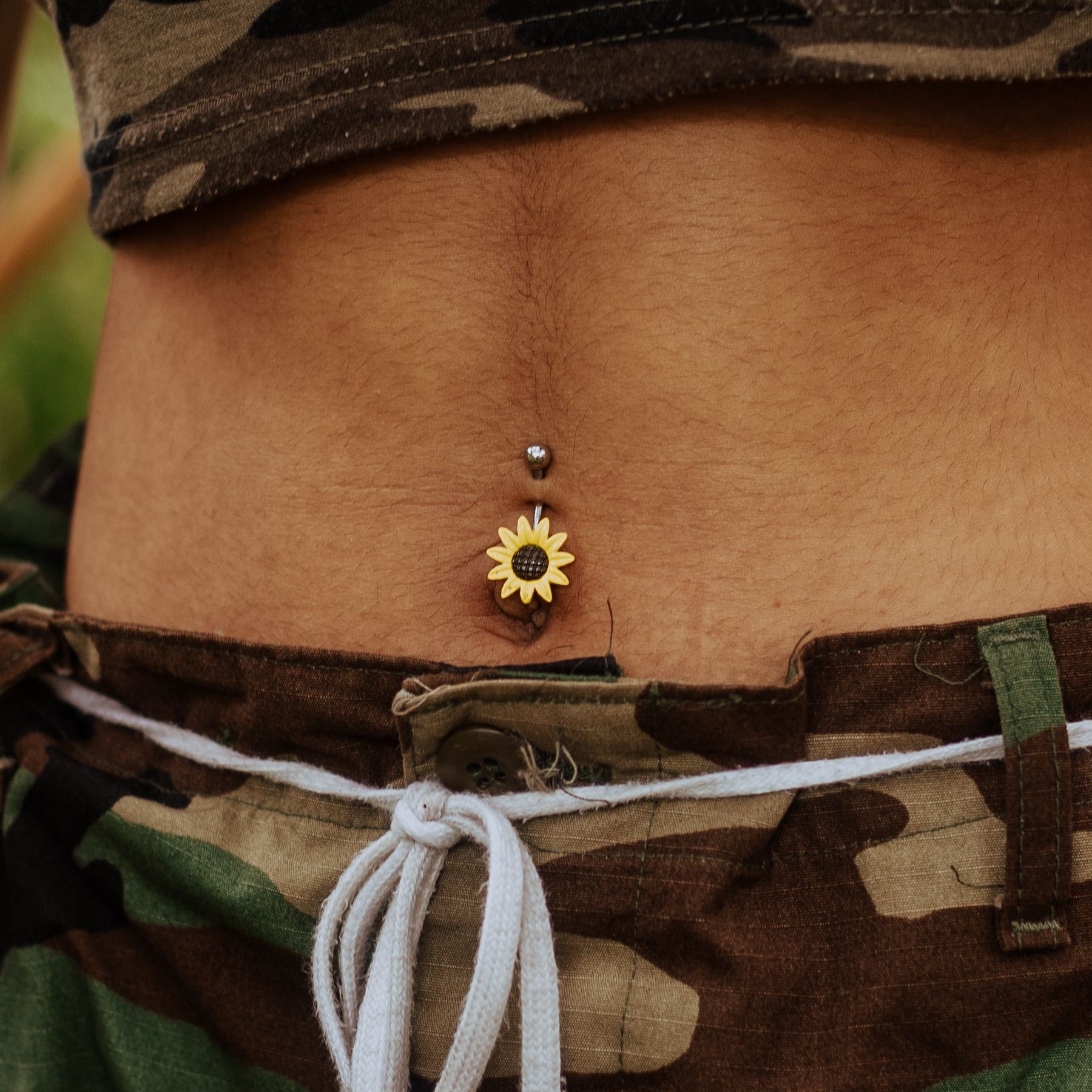
Navel piercings take longer to heal than most people expect — commonly somewhere in the range of 6 to 12 months, sometimes longer, since the belly button sits in an area that moves and rubs against clothing constantly. Good aftercare habits early on make a real difference in how smoothly that process goes.
What You’ll Need
Aftercare doesn’t require much: sterile saline spray or wound wash, clean paper towels or gauze for patting dry, and loose clothing you don’t mind an occasional saline drip on. That’s genuinely the whole list — anything beyond that (special soaps, ointments, essential oils, tea tree or lavender treatments) tends to do more harm than good on a healing piercing, no matter how gentle the packaging claims it is.
Buying pre-mixed sterile saline specifically formulated for wound care is worth the small extra cost over trying to mix your own from table salt and water, since getting the concentration wrong in either direction can irritate rather than soothe the area.
Keep It Clean, But Don’t Overdo It
A simple sterile saline soak or spray, once or twice a day, is generally all a healing piercing needs. Avoid alcohol, hydrogen peroxide, and strong antibacterial soaps — they’re often harsher than necessary and can irritate or dry out the skin around the piercing, which can actually slow healing down. Pre-mixed wound wash sold specifically for piercings works well if you’d rather not measure your own saline from salt and water.
Hands Off (Mostly)
Try not to rotate, twist, or move the jewelry while it’s healing, and always wash your hands before touching the area at all. It’s tempting to check on it constantly, but less handling generally means less irritation. This applies to friends and partners too — the fewer hands near a healing piercing, the better.
Watch What Touches It
Loose clothing helps prevent snagging and friction, and it’s worth planning around for the first several weeks especially, since a healing piercing sits directly where most waistbands do. Pools, hot tubs, lakes, and the ocean are best avoided until healing is complete, since they carry a higher risk of introducing bacteria into a fresh piercing — a waterproof bandage can help if a swim is unavoidable. Our guide to belly rings and swimming covers this in more depth if pool or beach season falls during your healing window.
A Rough Healing Timeline
| Timeframe | What’s Typical |
|---|---|
| Weeks 1–2 | Redness, mild swelling, and tenderness are common and expected |
| Weeks 3–8 | Surface skin starts to look normal, but the piercing is still healing internally |
| Months 3–6 | Continued internal healing; jewelry should still stay in place |
| Months 6–12 | Most piercings are fully healed; safe to consider a jewelry change |
This is a general guide rather than a guarantee — healing speed varies by person, and it’s worth checking with your piercer before assuming you’re fully healed just because the timeline says so.
Lifestyle Factors That Affect Healing
A few everyday habits matter more than people expect. Staying hydrated and eating reasonably well supports the body’s general healing process, the same way it would for any wound. Smoking and excessive alcohol are both associated with slower wound healing generally, so cutting back during the healing window isn’t a bad idea if you’re already inclined to.
Sleep position is worth a thought too — sleeping on your stomach puts direct, sustained pressure on a healing navel piercing for hours at a time. Side or back sleeping is gentler, and a small travel pillow tucked against your side can help you stay off your stomach if that’s your usual position.
Exercise doesn’t need to stop entirely, but anything involving tight waistbands, repetitive core movement, or direct contact — certain yoga poses, contact sports, tight compression leggings — is worth modifying or pausing for the first several weeks. Once swelling has settled and the surface looks calm, most activity can resume gradually as long as nothing is actively rubbing or pressing on the area.
Know the Difference Between Normal Healing and a Problem
Some redness, mild swelling, and clear or slightly whitish fluid are normal, especially in the first few weeks. According to the Association of Professional Piercers’ troubleshooting guidance, genuine problems tend to involve symptoms that get worse over time rather than gradually improve — spreading redness, significant warmth, thick yellow or green discharge, a fever, or pain that’s increasing rather than settling. When in doubt, it’s always worth asking a professional rather than guessing.
There’s a third possibility worth knowing about too: rejection, where your body gradually pushes the jewelry toward the surface rather than fighting an infection. It looks different from both normal healing and infection, and it’s common enough on navel piercings specifically to deserve its own explanation — our guide to piercing rejection and migration covers the early signs and what to do if you spot them.
Do’s and Don’ts at a Glance
| Do | Don’t |
|---|---|
| Clean with sterile saline once or twice daily | Use alcohol, peroxide, or harsh antibacterial soap |
| Wash hands before any contact with the area | Rotate or twist the jewelry while healing |
| Wear loose clothing over the piercing | Swim in pools, lakes, or the ocean before healed |
| Ask a piercer when something seems off | Change jewelry early because it “looks” healed |
Common Aftercare Mistakes
- Over-cleaning. More than two saline cleans a day can irritate healthy tissue just as much as neglect does.
- Using harsh products “just to be safe.” Alcohol and peroxide kill healthy healing cells along with bacteria.
- Changing jewelry early because it “looks” healed. Surface healing finishes well before internal healing does.
- Ignoring early irritation. A snagging waistband or a nickel-containing piece left unaddressed tends to get worse, not better, on its own.
Frequently Asked Questions
Once or twice a day with sterile saline is enough for most people. More frequent cleaning doesn’t speed healing and can actually irritate the area.
Mild itching can be a normal part of healing, but resist the urge to scratch directly at the piercing. If itching is intense or paired with redness and discharge, it’s worth having a piercer take a look.
Not meaningfully — healing happens on its own schedule. The best you can do is avoid slowing it down with over-cleaning, harsh products, early jewelry changes, or unnecessary friction.
Implant-grade titanium or niobium are generally the safest choices for a healing piercing. Our hypoallergenic materials guide covers why these outperform other metals during this stage.
Probably not yet. The surface can look completely normal well before the internal piercing channel has finished forming, which is why most piercers recommend waiting the full six-to-twelve-month window regardless of appearance.
Yes, more than people expect. Consistent pressure from stomach sleeping can irritate a healing piercing over weeks and months, so side or back sleeping is generally easier on the area while it heals.
Final Thoughts
And once it’s fully healed? That’s the time to start exploring the fun stuff — different metals, charms, and styles. Just give it the time it needs first. If you’re still deciding whether to get pierced at all, our guide to what a first belly button piercing actually involves covers the appointment itself, cost, and pain expectations before you book. And once you’re ready to check your size for a new piece, our belly ring size guide walks through gauge and length in detail.

